How Virginia Communities Are Pushing Back on Data Centers
Virginia's state watchdog documented data center harms, lawmakers required local impact studies, and counties tightened zoning. Here is how communities are using those tools.
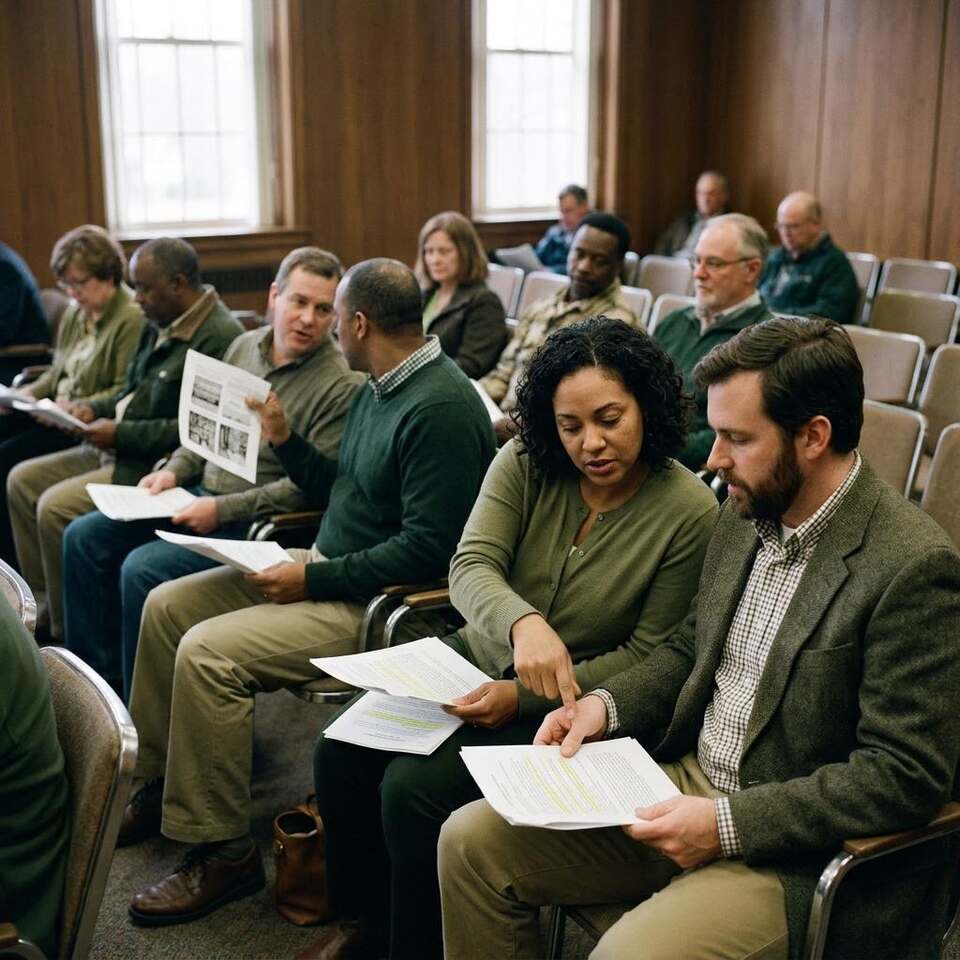
Virginia is the center of the data center world, and it is also where residents have built some of the most useful tools for fighting back. In 2024 and 2025, the state's own watchdog documented the harms, lawmakers moved to require local impact studies, and counties in the heart of "Data Center Alley" tightened their zoning. Here is how communities are using those tools.
Key takeaways
- In December 2024, the Joint Legislative Audit and Review Commission (JLARC) issued a comprehensive report on the effects of data center development (Report 598).
- In the 2025 General Assembly session, more than 40 data center bills were filed, but only 4 passed both chambers, and 3 of those went to the Governor.
- HB1601 and SB1449 would require localities to study a proposed facility's impact on ground water, agricultural resources, nearby schools, and residential neighborhoods, and would require utilities to notify local governments about new substations and transmission needs.
- HB2084 directs a study of whether current electricity rate classifications are reasonable.
- Loudoun County weighed requiring a special exception, rather than by-right approval, for data centers in three remaining districts, with a Board of Supervisors vote scheduled for March 18, 2025, affecting Ashburn's "Data Center Alley," the world's largest concentration of data centers.
- Fairfax County adopted new restrictions and approval criteria in September 2024, and Prince William County reviewed shrinking its data center overlay district by more than 1,500 acres.
The report that put numbers on the harm
In December 2024, JLARC, the Virginia legislature's nonpartisan watchdog, issued Report 598 on data center development. A state study like this matters because it moves the conversation from anecdote to documented findings that residents, local officials, and courts can rely on.
What lawmakers tried to require
Of more than 40 bills filed in 2025, only a handful survived, but the ones that did point straight at neighborhood harms.
HB1601 and SB1449, companion bills, would require a locality to study how a proposed high energy use facility would affect ground water, agricultural resources, nearby schools, and residential neighborhoods before approving it. They would also require utilities to tell local governments about new substations, use of existing substations, and transmission voltage needs. The industry opposed the utility notification piece.
HB2084 started as a look at data center rate subsidies and, in its approved form, directs the State Corporation Commission and the Virginia Department of Energy to study whether current rate classifications are reasonable. The question underneath it is whether ordinary customers are subsidizing data center power.
The real action is local
Some of the most direct tools are at the county level:
Loudoun County, home to Ashburn's "Data Center Alley," considered requiring a special exception instead of by-right approval for data centers in its three remaining districts, with a vote scheduled for March 18, 2025. The difference is large. By-right approval lets a project proceed with limited public review, while a special exception forces a public, discretionary process.
Fairfax County adopted a zoning amendment in September 2024 adding restrictions and approval criteria for by-right industrial data center development. Prince William County reviewed consultant recommendations that would cut its Data Center Opportunity Zone Overlay District by more than 1,500 acres.
What this means for you
These tools are how a neighborhood turns concern into leverage. A required impact study creates a record of harm to groundwater, schools, and homes. A special exception process gives residents a formal seat at the table. Utility notification tells a community what is coming before the substations arrive. If a facility is proposed near you, watch your locality's zoning calendar, show up to comment, and document the conditions you are already living with. Those steps protect your community and preserve your options.
Sources
- JLARC, Report 598 on data center development (December 2024), available at jlarc.virginia.gov.
- Virginia HB1601, SB1449, and HB2084 (2025 session), and the HB1600 budget directive establishing a Joint Subcommittee on Tax Policy review of the exemption.
- Loudoun County proposed zoning ordinance amendment (vote scheduled March 18, 2025); Fairfax County zoning ordinance amendment (adopted September 2024); Prince William County overlay district review.
- Reporting by DLA Piper, "Recent legislative and local actions affecting data center development in Virginia" (March 2025).
Editorial note: local ordinance actions and bill outcomes may have changed since March 2025. Confirm the current status of each item and the JLARC report citation before publishing.
Related reading
- Virginia's data center tax break: who really pays?
- The safeguards Virginia wants to attach to data centers
- Rushed approvals: when a rezoning can be challenged and undone
Attorney Advertising. This article is general information, not legal advice, and does not create an attorney-client relationship. If a data center is affecting your home, contact us for a free, confidential case review.
Is a data center affecting your home or community?
Tell us what you're experiencing. A case review is free, confidential, and comes with no obligation. If we can help, we'll tell you. If we can't, we'll point you in the right direction.