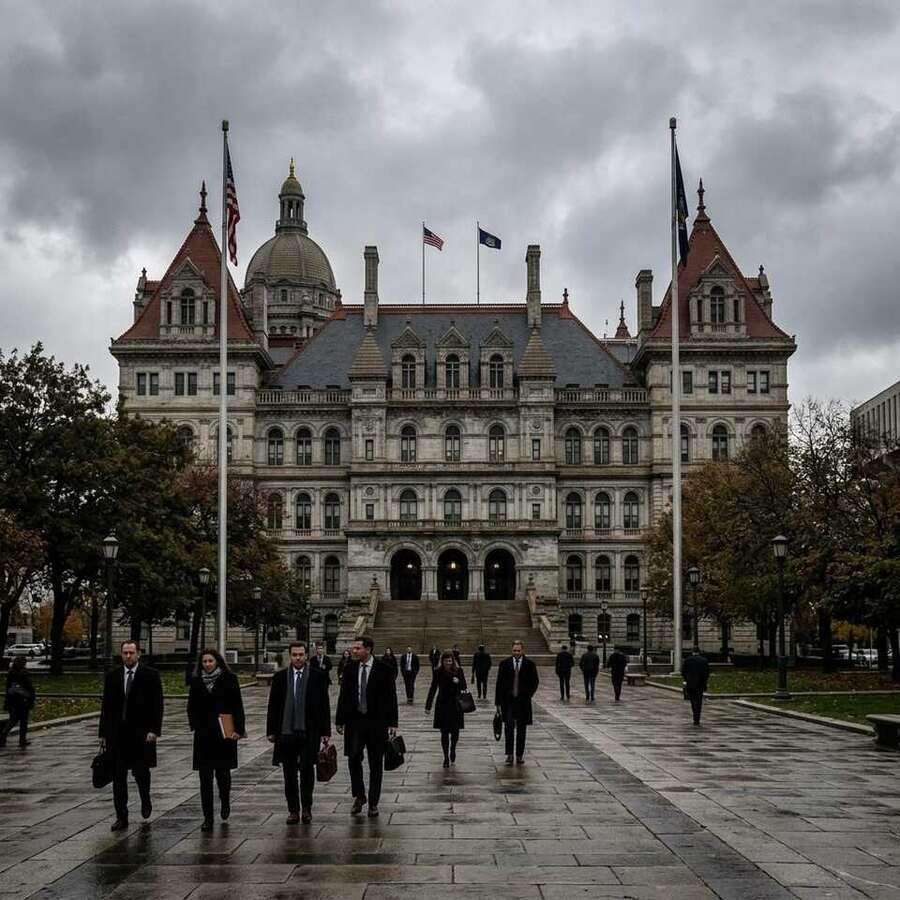
A bill in the New York State Senate would hit pause on new large data centers. If it becomes law, S.9144 would bar permits for big facilities for at least three years while the state studies their effects on the electric grid, water, and air. It is a proposal, not yet law, but it is one of the clearest signs yet that states are willing to slow the build-out to protect residents.
Key takeaways
- The bill, Senate Bill S.9144, would prohibit new permits for data centers capable of using 20 megawatts (MW) or more of electricity.
- The pause would last at least three years. Under the bill, regulations could not be issued until at least three years after its effective date.
- It would not revoke permits already issued, but it would apply to additional permits needed for projects already under construction.
- The Department of Environmental Conservation (DEC) would prepare a broad environmental study covering electricity use, water use, land use, greenhouse gases, air pollutants, noise, and electronic waste, with a public comment period of at least 120 days and nine regional public hearings.
- The Public Service Commission (PSC) would study, within 18 months, how data centers affect electricity and gas rates for homes and businesses.
- The bill contemplates that the costs of serving data centers would be assigned to the data center operators rather than spread to other ratepayers. It is drafted as a new Public Service Law Section 66-x.
What a moratorium does
A moratorium is a temporary stop. Rather than banning data centers permanently, S.9144 would freeze new large-facility permits while the state gathers facts and writes rules. The stated concerns behind the bill are the energy strain, water consumption, and greenhouse gas emissions tied to the rapid growth of high-capacity data centers, especially those built for artificial intelligence and cloud computing.
Who and what it covers
The bill targets scale. It applies to facilities capable of using 20 MW or more, which captures the large campuses driving most of the concern, not a small server room. Importantly, it does not undo permits already granted, but it can reach the additional approvals a project still needs even if construction has started.
The two studies
The bill would require two evidence-building exercises that residents rarely get:
A DEC Generic Environmental Impact Statement would examine electricity consumption, water usage, land use, pollution including greenhouse gases and air pollutants, noise, and electronic waste. It would include a comment period of at least 120 days and nine regional hearings across the state, giving communities a formal way to be heard.
A PSC rate impact study would, within 18 months, analyze how data centers affect electricity and gas rates for residential, commercial, and industrial customers.
Who pays
One of the most consequential ideas in the bill is cost allocation. It contemplates that all costs of providing and maintaining electric and gas service to data centers be assigned to the operators. That directly addresses a common complaint, which is that ordinary households end up subsidizing the enormous power needs of these facilities through their utility bills.
What this means for you
Even in states without a bill like this, S.9144 is a useful map. It names the exact harms that support both public advocacy and legal claims, noise, water, air, and cost-shifting, and it shows how an evidence record gets built. A pause is also an opening. It gives a community time to organize, to demand studies, and to insist that the people who profit from a facility pay for its true costs.
Sources
- New York State Senate Bill S.9144, including the proposed Public Service Law Section 66-x.
- New York State Department of Environmental Conservation (DEC) and Public Service Commission (PSC), named as the agencies that would conduct the required study and rate analysis.
- Reporting by DLA Piper, "New York proposes moratorium on data center permits" (February 9, 2026).
Editorial note: this is proposed legislation and may change or fail to pass. Confirm the bill's current status and text before publishing, and present it as a proposal rather than existing law.
Related reading
- Why the AI data center boom strains your power and water
- Virginia's data center tax break: who really pays?
- Air and emissions: backup generators and the air your family breathes
Attorney Advertising. This article is general information, not legal advice, and does not create an attorney-client relationship. If a data center is affecting your home, contact us for a free, confidential case review.
Is a data center affecting your home or community?
Tell us what you're experiencing. A case review is free, confidential, and comes with no obligation. If we can help, we'll tell you. If we can't, we'll point you in the right direction.